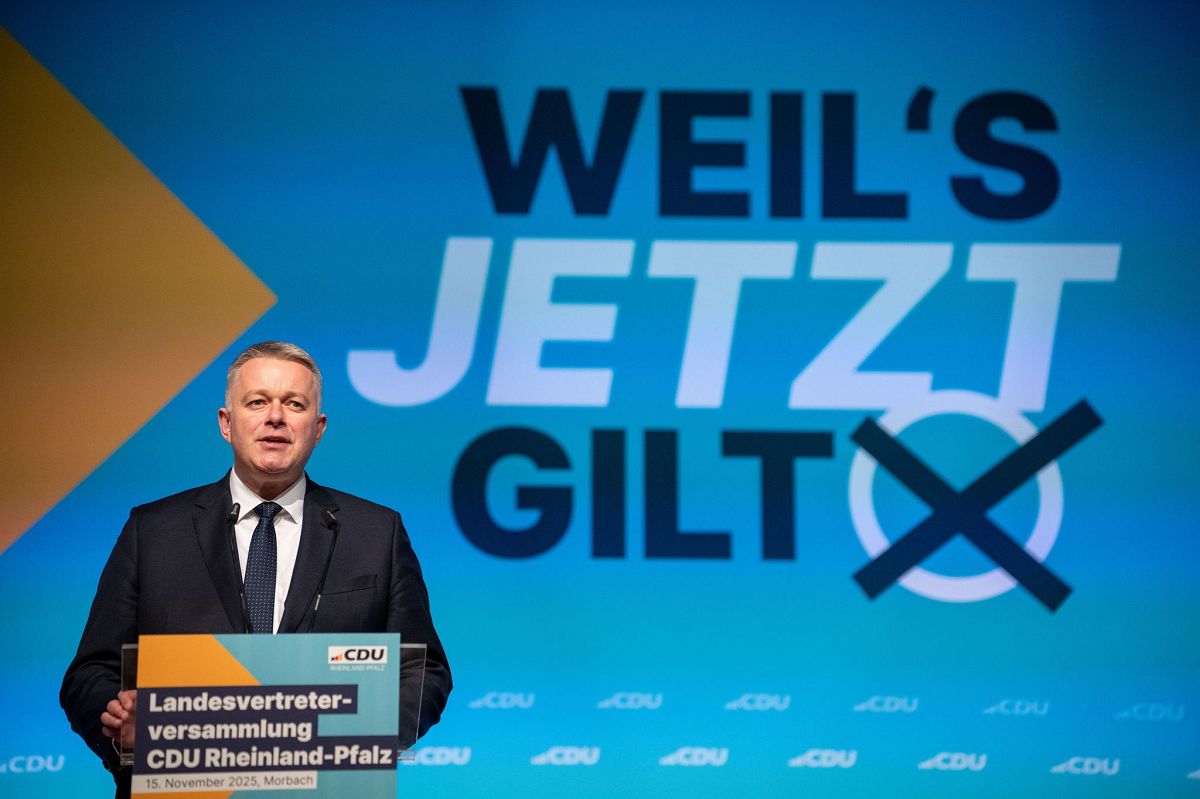
Gordon Schnieder's Weight: Why These Details Remain Private Despite Public Interest
In the dynamic world of German politics, figures like Gordon Schnieder, a prominent member of the Christian Democratic Union (CDU) and a leading candidate in Rhineland-Palatinate, frequently capture public attention. Beyond their policy proposals and political stances, there's a natural human curiosity about their personal lives. This curiosity often extends to seemingly mundane details such as a politician's physical attributes, leading to frequent online searches for terms like "Gordon Schnieder Körpergröße" (Gordon Schnieder height) and "Gordon Schnieder Gewicht" (Gordon Schnieder weight). While some personal information is readily available or deemed relevant, the specific details surrounding a public figure's weight often remain firmly in the private sphere. This article delves into Gordon Schnieder's public profile, the discernible interest in his physical characteristics, and the compelling reasons why certain aspects, particularly his weight, are not disclosed.
Gordon Schnieder: A Profile in German Politics
Born on October 14, 1975, Gordon Schnieder is a seasoned politician whose career has unfolded within the framework of the Federal Republic of Germany's political system. His birthdate places him firmly among a generation of leaders who have dedicated their working lives to public service. Schnieder's political journey began early; he joined the CDU at the age of 16, demonstrating a long-standing commitment to the party's principles and goals.
As a leading figure, particularly in the state of Rhineland-Palatinate, Schnieder's influence is notable. He is deeply engaged in regional topics, ranging from infrastructure and economic development to crucial societal issues. His ambition includes challenging the long-standing leadership of the SPD in the state, aiming to bring fresh perspectives and policies to the forefront. Among his stated political objectives are implementing a mandatory final year of kindergarten, reducing bureaucratic hurdles for citizens and businesses, and significantly improving medical care in rural areas – issues that resonate deeply with the electorate. His dedicated work in state politics ensures his regular appearance in news features, interviews, and public discussions, cementing his status as a recognizable and influential personality within German political discourse.
The Public's Fascination with Personal Details: Gordon Schnieder's Height
It's an undeniable truth that human beings are inherently curious about those in the public eye. When a politician like Gordon Schnieder frequently appears on television, speaks at events, and engages with the media, it's natural for audiences to form a visual impression and, subsequently, an interest in their physical characteristics. This often manifests in a surge of online queries. One of the most common searches, as observed across various platforms, revolves around "Gordon Schnieder Körpergröße" – his height.
In Schnieder's case, his height is one of the few physical attributes that has been publicly mentioned and is widely available. Various profiles indicate his height as approximately
1.85 meters (or about 6 feet 1 inch). This places him above the average height for adult men in Germany. While height generally plays a minor role in a politician's professional performance, it becomes a point of interest because it's a visible, quantifiable trait that contributes to a public figure's overall presence. People often use such information to build a more complete mental picture of the individual, perhaps even subconsciously comparing them to themselves or other public figures. This quest for physical details forms part of a broader desire for a comprehensive understanding of the personalities shaping our society, extending beyond just their political manifestos. For a deeper dive into this aspect, readers might find value in our related article:
Gordon Schnieder: His Height of 1.85 Meters and Public Interest.
The Elusive Number: Why Gordon Schnieder's Weight Remains Private
While Gordon Schnieder's height is a matter of public record, his weight – the "Gewicht" aspect of the common German search term "Gordon Schnieder Größe Und Gewicht" – is a detail that remains largely undisclosed. This isn't unique to Schnieder but is a prevalent practice among public figures, particularly politicians. There are several compelling reasons for this guarded privacy:
1.
Focus on Policy, Not Physique: The primary role of a politician is to serve the public through policy-making, governance, and representation. Their professional achievements, legislative efforts, and commitment to their constituents are the metrics by which they should ideally be judged. Disclosing weight can shift the focus from these crucial responsibilities to superficial physical assessment, which detracts from their core purpose.
2.
Personal Autonomy and Boundaries: Even for individuals in the most public of roles, there remains a fundamental right to personal privacy. Details like weight are intimately tied to an individual's personal health, diet, and lifestyle choices, which are generally considered private matters. Politicians, like all people, are entitled to maintain boundaries around such sensitive information.
3.
Fluctuating Nature and Misinterpretation: Unlike height, which remains relatively constant in adulthood, weight can fluctuate significantly due to a myriad of factors – stress, travel, diet, health, and even seasonal changes. Public disclosure of a specific weight number could lead to constant scrutiny, speculation, or misinterpretation every time a public figure's appearance changes, creating unnecessary and unproductive distractions.
4.
Prevention of Superficial Judgment and Body Shaming: In an era where online commentary can often be harsh and judgmental, providing a specific weight could open the door to unwarranted criticism, body shaming, or health speculation. Protecting public figures from such superficial attacks allows them to concentrate on their demanding roles without fear of personal ridicule.
5.
Professionalism and Image Control: While politicians naturally maintain a professional and presentable appearance, the exact numerical value of their weight is largely irrelevant to their ability to govern effectively. Public figures strategically manage their image to project competence and trustworthiness, but this rarely extends to sharing precise biometric data that could be weaponized or misinterpreted by the media or opponents.
For politicians like Gordon Schnieder, maintaining a professional yet approachable image is crucial. While they acknowledge their visibility, they also draw clear lines regarding what personal information is relevant to their public duty and what is not. This selective disclosure allows them to remain accessible without sacrificing their personal dignity or inviting undue scrutiny into aspects of their lives that have no bearing on their political performance. The interplay between a politician's visible traits and their public perception is a fascinating subject, further explored in our article:
Gordon Schnieder: Decoding His Physical Traits and Public Appeal.
Beyond the Numbers: Health, Image, and the Demands of Public Service
While the exact numbers for "Gordon Schnieder Größe Und Gewicht" remain partially private, what is undeniably important for any public servant is their overall health and well-being. The life of a politician is incredibly demanding, characterized by:
*
Long Hours and Intense Schedules: Political work often involves lengthy parliamentary sessions, late-night debates, and early-morning public appearances.
*
Extensive Travel: Representing constituents often means frequent travel, both within their region and nationally or internationally.
*
High-Pressure Environments: Constantly being in the public eye, facing media scrutiny, and making critical decisions places immense psychological and emotional strain on individuals.
A stable physical and mental constitution is therefore not merely a personal preference but a crucial requirement for sustainable and effective long-term public service. Politicians, including Gordon Schnieder, understand the importance of maintaining their health not just for themselves, but also for their ability to fulfill their responsibilities to the electorate. While there are no public reports of any serious illness concerning Gordon Schnieder, the necessity for robust health is an unwritten rule in the political arena.
The emphasis on a "groomed appearance" often mentioned in connection with public figures isn't about conforming to arbitrary beauty standards, but rather about projecting an image of seriousness, capability, and respect for the office and the people they serve. It signals attentiveness and a readiness to engage, rather than being a superficial measure of worth. Ultimately, the focus remains on their capacity to lead and represent, with physical well-being serving as a foundation for that demanding work.
Conclusion
Gordon Schnieder exemplifies a modern German politician who balances public duty with personal privacy. While his height of 1.85 meters is an acknowledged fact, the specific details of his weight remain, and rightfully so, undisclosed. The public's interest in "Gordon Schnieder Gr��¶ÃŸe Und Gewicht" reflects a natural curiosity about individuals who shape our society. However, the decision to keep certain personal metrics private underscores a broader understanding: a politician's effectiveness is measured by their policies, integrity, and dedication to public service, not by their exact physical dimensions. As Schnieder continues his work in Rhineland-Palatinate, focusing on critical issues like healthcare, bureaucracy, and early childhood education, it is these contributions that will define his legacy, far more than any fleeting number on a scale.